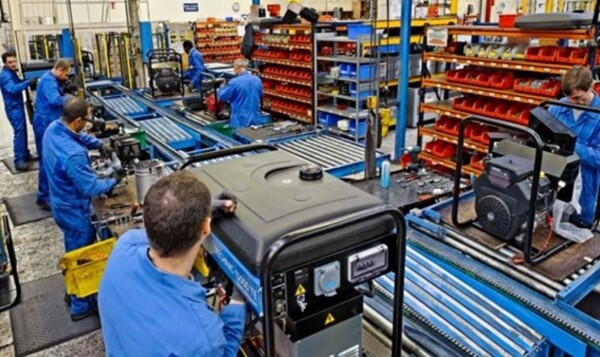
The Argentine economy is undergoing a phase of realignment marked by a sharp turn in financial expectations following the electoral process. For the ruling party, this is a decisive window to consolidate macroeconomic stabilization and transform the current financial relief into a sustainable growth process. As explained by the Vice President of the Central Bank, Vladimir Werning, after the elections, there was a recomposition of expectations both in the market and among analysts, which drastically reduced the pressure on the dollar. Private reports indicate significant year-on-year declines in key industrial sectors, with setbacks of over 30% in areas like textiles and marked drops in metallurgy, automotive, and rubber and plastic.
This is added to Argentina's partial return to external financing, evidenced by the recent placement of the Bonar 2029 bond, the first issuance in dollars since 2018, although with a rate above 9%, which reflected the limitations imposed by a country risk close to 650 basis points. Exchange rate stability began to spread to other financial variables. After months of strong preventive dollarization, demand for foreign currency for savings plummeted 95% in just two months, while the government projects that monthly inflation will fall below 2% starting in January, in a scenario of greater exchange rate stability, a drop in interest rates, and structural reforms under debate in Congress.
The behavior of the foreign exchange market clearly reflects this change in sentiment. In September, at the peak of political uncertainty, demand for dollars for hoarding had reached USD 4.6 billion. Later, the Central Bank will take center stage, within a plan of remonetization that foresees issuing pesos without sterilizing against the purchase of dollars, strengthening the balance of the monetary authority. The supply of foreign currency would also play in favor of this strategy. Despite the shock, the exchange rate remained within the established bands and managed to stabilize around 1,460 pesos, even in a context of low liquidation from the agro-export sector.
From the economic team, they highlight that the key was the strengthening of the credibility of the exchange rate scheme. The opening of trade, the boom in e-commerce, and the entry of imported products lowered prices in several sectors, but at the same time hit local production. In this context, the government bets on labor reform and, later, tax reform, to reduce the so-called Argentine cost and give a margin of survival to companies facing an increasingly intense external competition.
Short-term financing rates, such as the stock margin and the discount of checks, were also reduced, providing partial relief for credit. In parallel, inflation expectations show a downward trend. The immediate objective is to raise the dollars needed to face debt maturities of about USD 4.2 billion in January. However, in November that amount was reduced to just USD 200 million, an unprecedented contraction that marks the end of the defensive dollarization process that dominated the months prior to the elections.
The latest Central Bank Market Expectations Survey projects even a monthly index of 1.5% towards April 2026. However, the productive front continues to sound the alarm. The official described the previous run as a true 'black swan,' by pointing out that more than 50% of the M2 —circulating plus sight deposits— was poured into the purchase of dollars or hard currency coverage instruments. In this framework, the National Treasury began to intervene moderately to avoid an excessive appreciation of the peso, and it is expected that it will accelerate the purchase of currencies in the coming weeks. In the short term, the entry of dollars from a record wheat crop is expected, to which are added more than USD 5,000 million recently captured by companies and provinces in international markets that have not yet been poured into the local market.
Interest rates registered a strong drop: the main banks pay between 21% and 23% annual for fixed terms, while smaller entities offer around 25%. The 2.5% recorded in November would have marked a ceiling, and official and private projections anticipate a gradual deceleration in December to be below 2% from January.